US, UK, and Canada Impose Sanctions on Russia’s RT for Global Disinformation Operations
On Friday, the United States, Canada, and the United Kingdom accused Russia’s global television network, RT, of operating as an extension of Russia’s intelligence agencies. In response, new sanctions were announced to cut off international financing for RT’s disinformation operations worldwide.
Justice Department Indictment: RT Funds Disinformation in the US
The sanctions follow the Justice Department’s recent indictment of two RT employees for funneling $9.7 million to American podcasters via Tenet Media, a video-streaming platform in Tennessee. The aim was to push Kremlin-backed propaganda and undermine the American democratic process ahead of the upcoming presidential election.
Secretary of State Blinken: RT Is an Arm of Russian Intelligence
Speaking at the State Department, Secretary of State Antony J. Blinken emphasized that RT is no longer just a state-owned news network, but an active participant in covert intelligence operations. Blinken noted:
“Russian weaponization of disinformation to subvert and polarize free and open societies extends to every part of the world.”
He urged US allies to treat RT’s activities as they would other Russian intelligence operations within their borders.
RT's Global Operations and Covert Activities
RT’s disinformation campaigns extend beyond the United States. These operations include cyberespionage, fund-raising for Russia’s war in Ukraine, and laundering funds to purchase light military equipment such as sniper rifles and drones. These purchases were made from countries like China, further illustrating RT’s involvement in covert operations.
RT’s Interference in Global Elections and Media Influence
The sanctions are part of an ongoing effort by the Biden administration to thwart Russia’s influence operations ahead of the November presidential election. US intelligence officials have accused the Kremlin of attempting to bolster former President Donald Trump’s campaign due to its frustration with the Biden administration’s support for Ukraine.
RT has also been linked to interference in elections and media influence in countries such as Argentina, France, and Moldova, which is set to hold elections soon. Secretary Blinken revealed that RT covertly operates media outlets in Germany (Red.) and Africa (African Stream), designed to spread Kremlin-backed disinformation.
The Disputed Gaza-Egypt Border: Key Issues and Implications
The Contention Over the Gaza-Egypt Border
The border between Egypt and Gaza has emerged as a critical issue in cease-fire negotiations amid the ongoing war in Gaza. This contentious point involves not only Israel and Hamas but also Egypt.
Israel’s Stance: Securing the Philadelphi Corridor
Israeli Prime Minister Benjamin Netanyahu insists on occupying the border area to prevent Hamas from smuggling weapons from Egypt’s Sinai Peninsula into Gaza. He views control of the Philadelphi Corridor as vital for Israel's security. Some Israeli politicians, however, suspect that Netanyahu may be using this issue to sidestep a cease-fire agreement and the release of hostages.
Egypt’s Position: National Security and Public Perception
Egypt argues that it has already addressed smuggling concerns by building barriers, destroying tunnels, and patrolling the area. Cairo believes accepting Israeli troops would jeopardize its national security and face significant domestic backlash.
The Strain on Egypt-Israel Relations
The dispute has strained the historically strong security partnership between Egypt and Israel, challenging the foundation of their 1979 peace treaty, which has been crucial to Middle East stability.
Assessing Hamas’s Smuggling Capabilities
The Scope of Smuggling
The exact extent of Hamas's smuggling through the Gaza-Egypt border remains unclear. Israeli officials have debated the scale, with some downplaying the issue and others stressing its significance to Israel’s security.
Types of Smuggled Weapons
Hamas has reportedly smuggled components for long-range rockets, rocket-propelled grenades, sniper rifles, and other weaponry into Gaza. Despite efforts by Egypt to curb this activity, some smuggling still occurs, primarily through the Rafah crossing.
Egyptian Successes and Limitations
Egypt's measures have reportedly reduced the smuggling of sophisticated anti-tank missiles into Gaza, with much of Hamas's weaponry being locally produced. Hamas has also acknowledged receiving arms from abroad, notably from Iran.
Conclusion: The Path Forward
The ongoing issue highlights the complex interplay of regional security dynamics and the challenge of achieving a lasting cease-fire while addressing the security concerns of all parties involved.
England's Declan Rice and Jack Grealish overcame a hostile reception in Dublin to score both goals in England's 2-0 Nations League victory over the Republic of Ireland on Saturday. Despite the jeers, both players maintained their respect for the Irish team they once represented at youth level.
Rice and Grealish's Strong Ties to Ireland
Declan Rice, who previously played for Ireland at youth level and made three senior appearances for the country, faced boos from sections of the Irish crowd with every touch. However, Rice responded on the field, scoring England’s opener but opting not to celebrate. His decision was driven by a deep respect for his Irish roots. "My nan and granddad on my dad's side of the family are all Irish, and they've passed away. I didn't want to disrespect their memory by celebrating," Rice told Sky Sports.
Rice reflected on his time playing for Ireland, stating, "I had such an amazing time playing for Ireland at the under-19 and under-21 levels. They were great memories, and I have nothing bad to say."
Similarly, Jack Grealish, who scored the second goal for England, also once represented Ireland at youth level. The hostile atmosphere in Dublin didn't come as a surprise. "It was what Declan and I expected," Grealish told ITV. "We have nothing but respect for Ireland and enjoyed our time playing for them. I have a lot of Irish family, so there’s no bad blood whatsoever from my side."
Having been left out of Gareth Southgate’s Euro 2024 squad, Grealish made the most of his recall under interim manager Lee Carsley. "The summer was one of the worst of my life, watching Euro 2024 unfold from the sidelines. It was difficult, but it gave me the resolve to bounce back," Grealish said. "It meant everything, hearing the fans cheer my name after the game."
Lee Carsley's Return to Dublin
Interim manager Lee Carsley, himself a former Ireland international, had his own humorous moment during the match. While walking down the tunnel, Carsley instinctively turned towards the home dugout, a reflection of his time playing for Ireland. "As you know, I spent a lot of time on the bench, so I know exactly where that is," Carsley said jokingly to RTE.
Conclusion: A Night of Respect and Redemption
Despite the tension, both Rice and Grealish handled the situation with respect, showcasing their professionalism while leading England to a solid win. Their performances were a reminder of their talent, as both players continue to rise in the international arena.
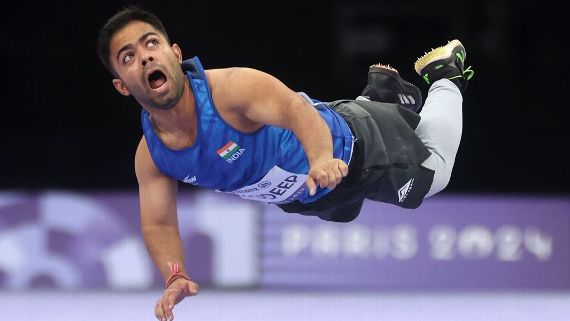
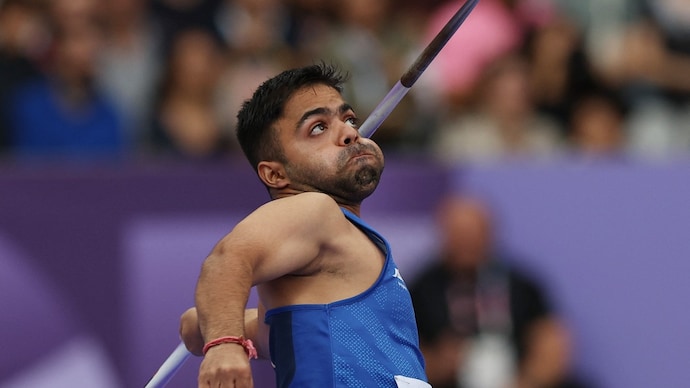
Standing at just 4 feet 4 inches, Navdeep faced a unique challenge in a sport where the javelin is nearly 7 feet long. Despite the odds, once he began to find success, there was no turning back. "The spear was big when I first saw javelin throwers practising during competitions. I met Sandeep bhaiya in one such event, and we became friends later. When I decided to pursue the sport, he trained me and helped me iron out all my flaws," Navdeep told the New Indian Express.
A Paralympic Champion at Paris
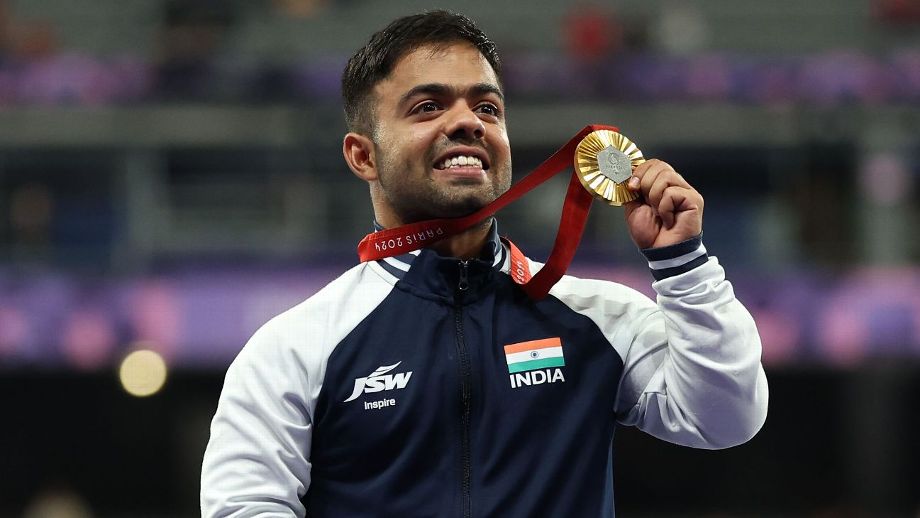
Heading into the Paris Paralympics final, Navdeep knew he was up against the top competitors, including all the medallists from Tokyo. But with his second throw of 46.39m, which was a personal best, Navdeep sent a clear message that he was not leaving without a medal. In his next attempt, he set a new Paralympic record of 47.32m, earning him the top spot on the podium and the title of Paralympic champion.
India’s Success at Paris Paralympics 2024
Navdeep’s gold marked India’s 29th medal at the Paris Paralympics 2024, surpassing pre-Games expectations. His journey from heartbreak in Tokyo to triumph in Paris is a testament to his perseverance and talent.
Conclusion: A Story of Determination and Success
Navdeep Singh's transformation from a Tokyo heartbreak to a gold medal at the Paris Paralympics is an inspiring tale of dedication and resilience. Despite facing challenges due to his stature and switching sports, Navdeep has proven that with hard work and the right mentorship, nothing is impossible.
Powerlifting at the Paralympics: A Testament to Strength and Resilience
Powerlifting has long been celebrated as one of the most physically demanding sports, requiring immense strength, mental fortitude, and impeccable technique. When we think of powerlifting, images of heavy weights and intense concentration often come to mind. However, the realm of powerlifting expands beyond able-bodied athletes, embracing a diverse and inclusive category that celebrates athletes with disabilities—the Powerlifting Paralympics. This article aims to explore the intricacies of powerlifting in the Paralympic structure, the evolution of the sport, and the impact it has on athletes' lives.
The Foundation of Powerlifting in the Paralympics
The inception of Paralympic powerlifting can be traced back to the early 1980s when the sport was formally included in the Paralympic Games. The first official inclusion occurred in 1984 at the New York Games, demonstrating a pivotal moment in the realm of adaptive sports. Originally known as "weightlifting for the disabled," it gradually evolved into the powerlifting we recognize today, featuring distinct disciplines and competitive standards.
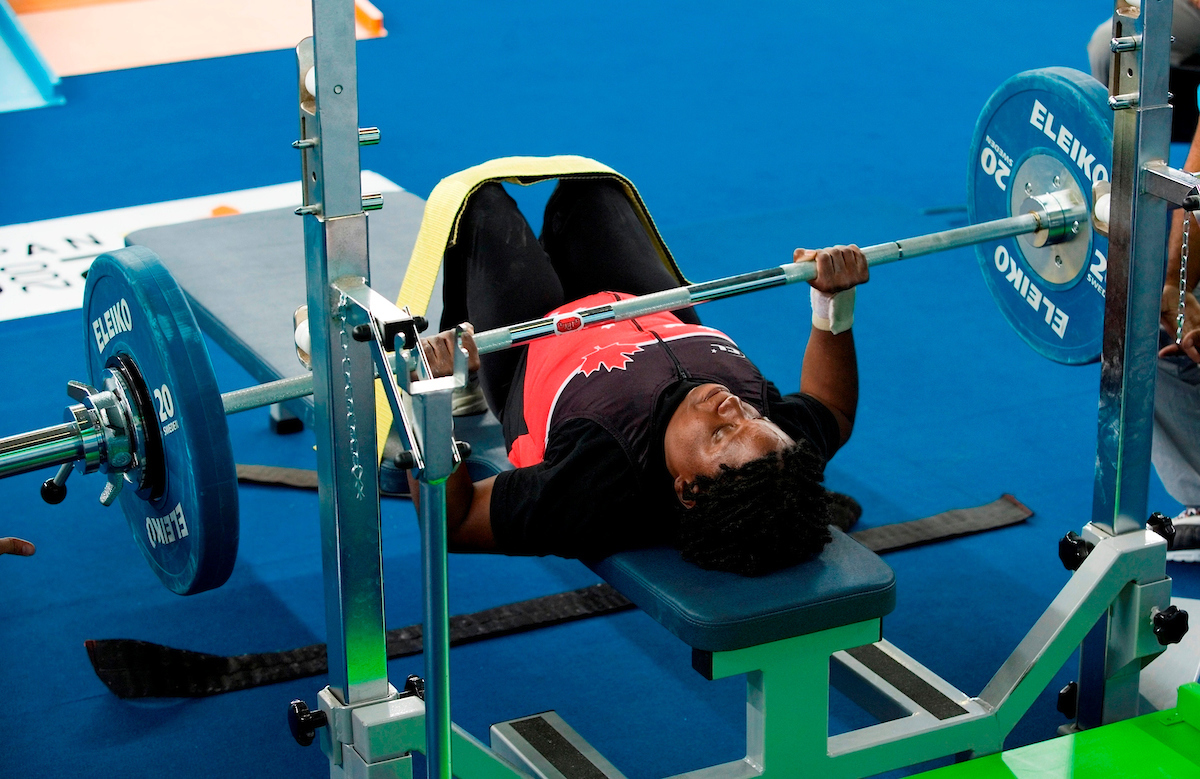
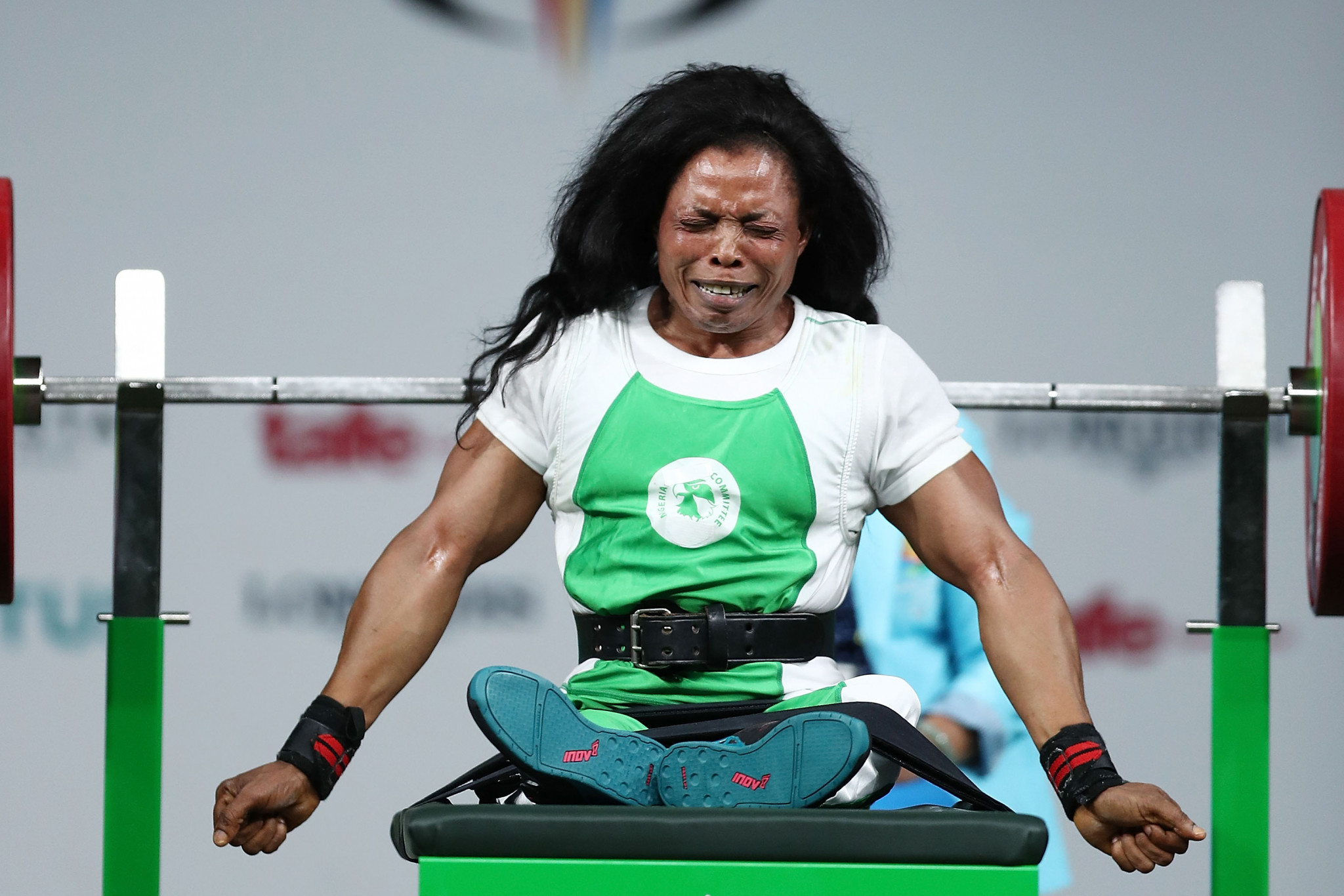
Paralympic powerlifting showcases athletes competing in the bench press, which is the sole lift contested in this specific division. Unlike conventional powerlifting, which includes the squat and deadlift, the focus on the bench press allows individuals with various disabilities to participate without compromising their safety. Athletes are classified based on their physical capabilities, which allows for fair competition. There are different classifications based on the degree of disability, ensuring that every athlete has an equitable chance to compete at a high level.
The Discipline of Powerlifting
Powerlifting is characterized by its three primary lifts: the squat, bench press, and deadlift. In the context of the Paralympics, however, emphasis is placed solely on the bench press. This approach streamlines the competition for athletes who may have mobility challenges while still effectively showcasing their strength and technique.
Training for powerlifting requires a robust regimen, encompassing strength training, technique refinement, and mental preparation. Paralympic athletes dedicate countless hours to perfecting their form, developing a deep understanding of biomechanical principles that underpin their performance. Many athletes engage with knowledgeable coaches and support staff who are trained to adapt programs effectively to accommodate various disabilities.
The Inclusive Nature of Paralympic Powerlifting
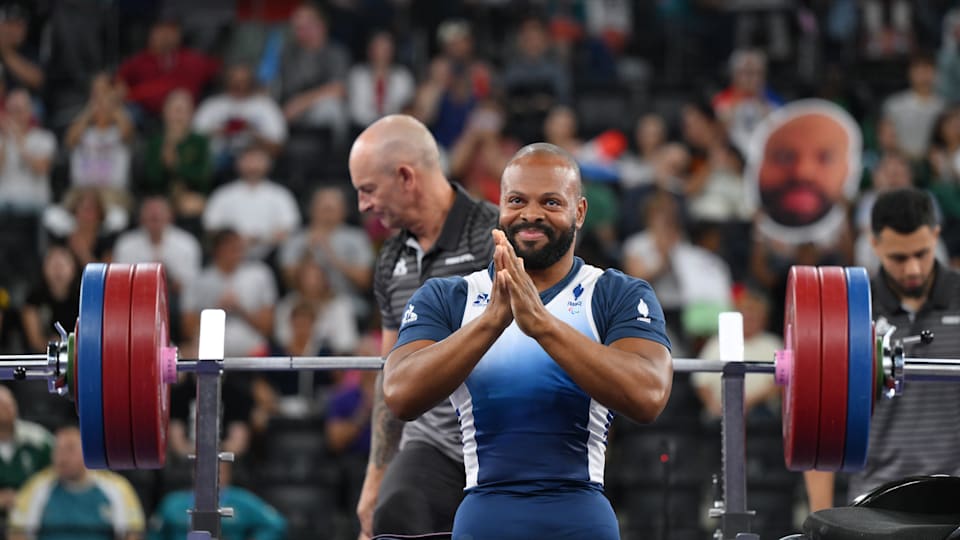
One of the most inspiring aspects of Paralympic powerlifting is its unwavering commitment to inclusivity. The sport is populated by a diverse array of athletes who embody tenacity and spirit in the pursuit of excellence. From those who compete with visual impairments to athletes with impairments in mobility, the spectrum of participants is broad and vibrant.
The inclusion of athletes with various disabilities reinforces the message that strength transcends physical limitations. Through their dedication, these athletes challenge stereotypes and inspire many to reconsider preconceived notions about ability and disability. The athletes serve as role models, demonstrating that with determination and hard work, it is possible to achieve remarkable feats.
The Importance of Representation
Representation in sports is crucial. For athletes with disabilities, seeing individuals like themselves in competitive venues can significantly enhance their drive to succeed. When powerful role models emerge from the realm of Paralympic powerlifting, they send a message of possibility to the next generation of athletes.
The Paralympics provide a platform for athletes to showcase their talents on a global stage. The visibility of competitors excelling within this framework not only inspires aspiring athletes with disabilities but also educates a broader audience about the capabilities and potential of individuals with disabilities. Furthermore, representation fosters a sense of community, where athletes can support one another in their journeys.
The Mental and Emotional Impact
Beyond physical strength, powerlifting instills mental resilience and emotional empowerment in its athletes. The challenges faced by Paralympic powerlifters often extend beyond the competition floor. Many athletes have confronted adversities in their lives, including overcoming societal stigma and personal hurdles.
The process of training and competing in powerlifting cultivates self-discipline, focus, and determination. These qualities resonate not only within the realm of sports but also spill over into the athletes' daily lives. The sense of accomplishment that accompanies setting personal records or achieving competitive milestones fosters an environment of growth and self-acceptance.
Additionally, athletes often engage in advocacy, utilizing their platform to raise awareness about issues related to disability, access to sports, and the importance of inclusion. Their journeys of perseverance and triumph serve to dismantle barriers and inspire societal change.
The Future of Paralympic Powerlifting
As we look to the future of powerlifting at the Paralympics, several critical issues warrant attention. The growth of the sport relies on continued support from organizations, sponsors, and media coverage. Increased visibility can attract more athletes to the sport, fostering a robust pipeline of competitors who can carry the torch into future competitions.
Moreover, initiatives focusing on accessibility and improved facilities for athletes are essential. Ensuring that powerlifting venues accommodate the diverse needs of Paralympic athletes creates an environment where every participant can thrive. The collaboration between national and international governing bodies, local clubs, and schools can catalyze growth at grassroots levels.
In conclusion, powerlifting at the Paralympics encapsulates much more than physical strength; it embodies resilience, community, and empowerment. As athletes continue to break barriers and redefine the realm of possibility, they inspire countless individuals to embrace their unique journeys. The world of Paralympic powerlifting is a celebration of human spirit, showcasing that strength comes in many forms, and the ability to overcome challenges is a universal trait worth honoring. Through dedication, passion, and commitment, these athletes remind us that true strength lies not only in muscle but also in the heart's unwavering capacity to aspire and achieve.